
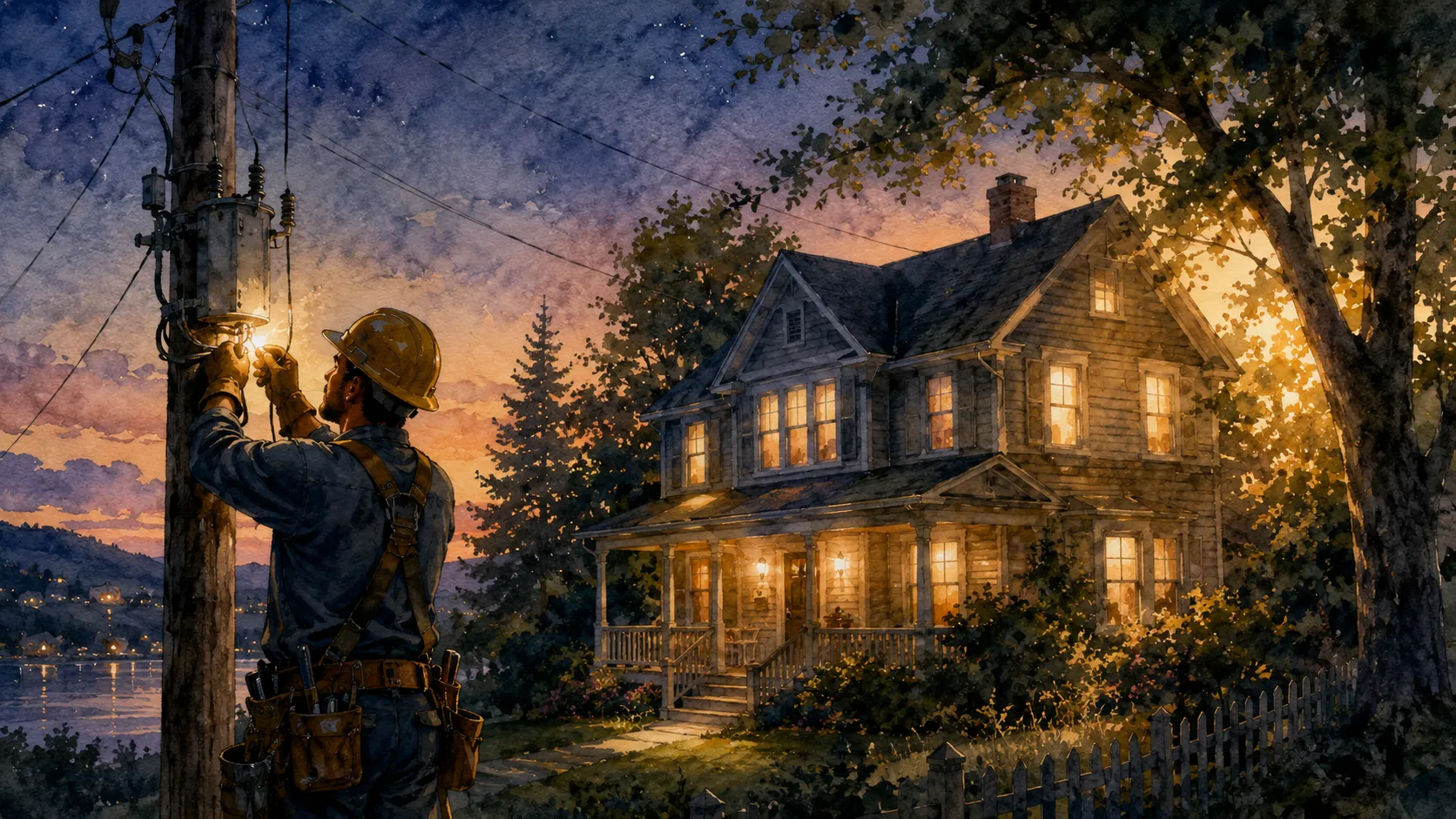
Before you assume the power company is responsible for a blackout, it’s important to understand that many electrical interruptions originate inside the home. A tripped circuit breaker, overloaded circuit, failed GFCI outlet, damaged wiring, or utility service issue can all leave parts; or all; of a house without electricity. Recent electrical safety guidance shows that overloaded circuits, faulty appliances, and hidden GFCI trips remain among the most common causes of residential power loss.
Understanding Why Home Power Suddenly Stops Working
Losing power can feel like someone pulled the plug on your entire routine. One moment you’re cooking dinner, working online, or watching television, and the next moment everything goes dark. While many people immediately assume the local utility company is experiencing an outage, the reality is that residential electrical systems contain multiple layers of protection that intentionally shut off power when something appears unsafe. Circuit breakers, GFCI outlets, and main disconnects are designed to interrupt electrical flow before overheating wires can create dangerous conditions.
Think of your home’s electrical system as a highway. Electricity travels through designated paths to reach lights, outlets, and appliances. When too much traffic enters the highway at once, safety mechanisms step in and close lanes to prevent accidents. That’s essentially what happens when a breaker trips or a GFCI outlet detects a fault. These devices aren’t malfunctioning; they’re often doing exactly what they were designed to do. Understanding this concept can help homeowners troubleshoot intelligently instead of guessing or repeatedly resetting devices without identifying the root cause.
Electrical interruptions may affect a single outlet, one room, several rooms, or the entire house. The size of the affected area provides important clues about the source of the problem. A single dead outlet might indicate a GFCI issue, while a completely dark house could point to a main breaker problem or utility service interruption. The key is approaching the situation systematically rather than assuming the worst.
Checking Whether the Outage Is Limited to Your Home
The first step in restoring power is determining whether the problem originates inside or outside your property. This simple investigation can save a significant amount of time and help you decide whether to troubleshoot your electrical panel or contact the utility provider.
Signs the Entire Neighborhood Has Lost Power
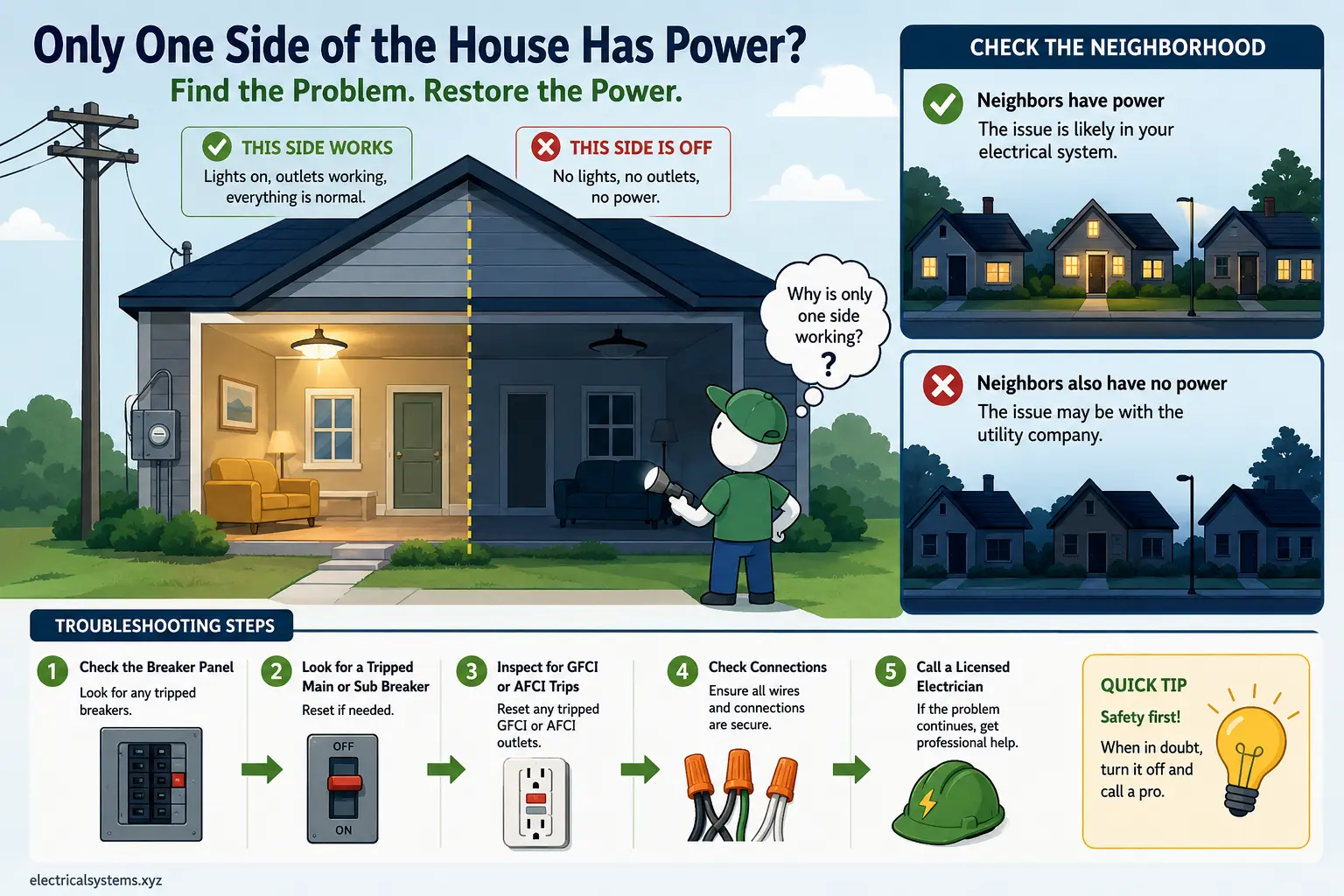
Start by looking outside. Are streetlights dark? Do neighboring homes appear to have no lights? Is traffic signaling equipment malfunctioning nearby? If multiple properties are affected, the issue is likely associated with the electrical grid rather than your home’s wiring.
Weather events frequently contribute to widespread outages. High winds can damage overhead lines, lightning strikes can affect substations, and heavy storms can knock tree branches into utility equipment. In these situations, your home’s electrical system may be functioning perfectly. Waiting for utility crews or checking your provider’s outage map is often the appropriate next step.
Signs the Problem Is Inside Your House
If neighboring homes still have power while your house does not, focus your attention on your electrical system. You may notice that only certain rooms are affected, specific outlets have stopped working, or appliances suddenly shut down while lights remain operational. These symptoms typically point toward a tripped breaker, overloaded circuit, GFCI interruption, or damaged electrical component.
Many homeowners overlook an important clue: partial outages. If half the house works and half does not, the problem may involve a major circuit issue or electrical service concern that requires closer investigation. Carefully observing what still functions can provide valuable information before opening the breaker panel.
Finding and Resetting a Tripped Circuit Breaker
Circuit breakers are the most common source of household power interruptions. These devices automatically disconnect electricity when they detect overloads, short circuits, or other abnormal conditions. According to electrical troubleshooting experts, homeowners frequently miss tripped breakers because the switch may not move completely to the OFF position. Instead, it often rests somewhere between ON and OFF.
How to Identify a Tripped Breaker
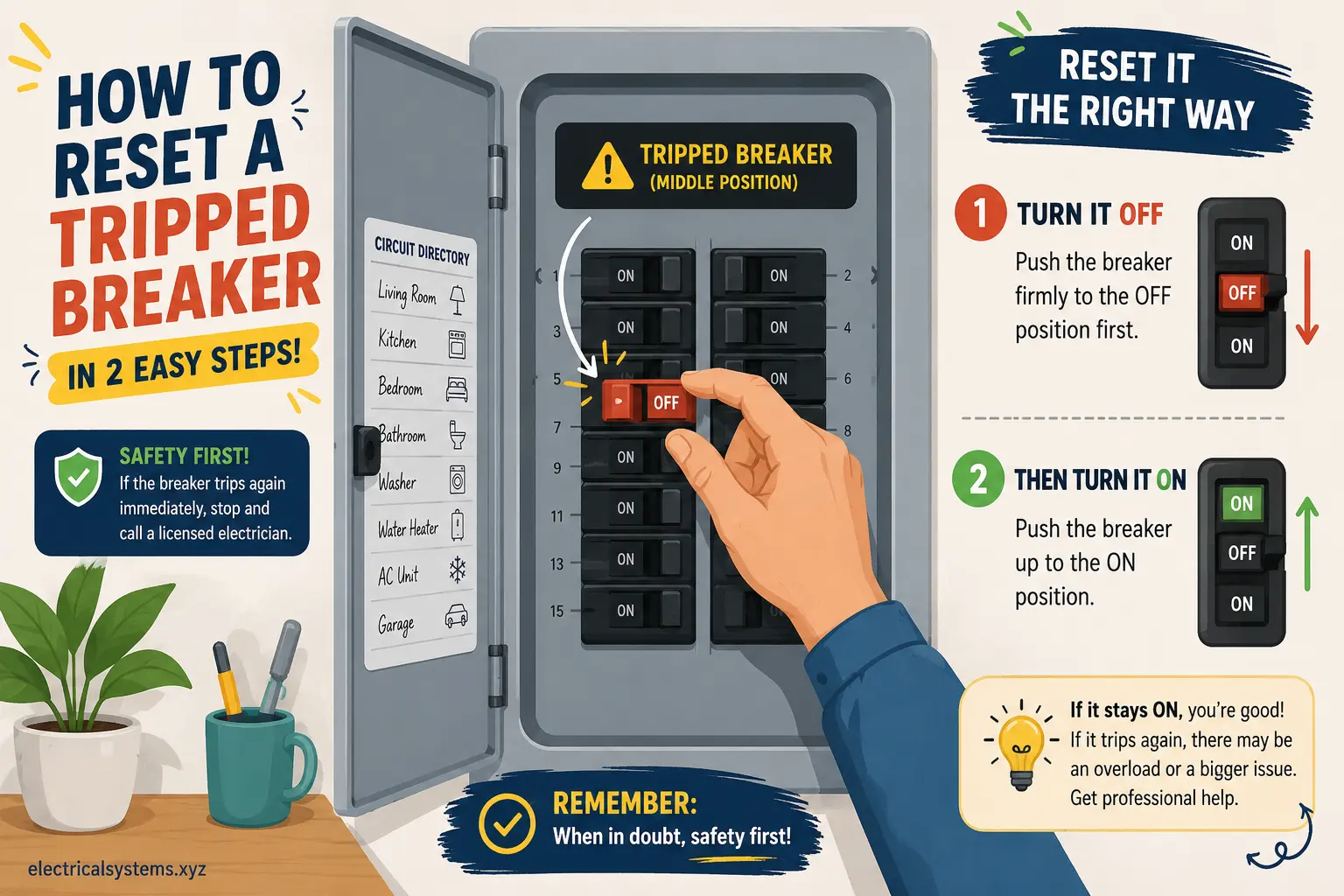
Open your electrical panel and examine each breaker carefully. A tripped breaker usually appears slightly out of alignment with neighboring breakers. It may look centered between positions or only slightly shifted. Do not assume a breaker is functioning correctly simply because it appears mostly ON.
Take your time during this inspection. Many electrical service calls occur because homeowners overlook a breaker that is visibly tripped but not obviously disconnected. Labels inside the panel can also help identify which circuit controls the affected area. If the panel is poorly labeled, you may need to inspect breakers individually.
The Correct Way to Reset a Breaker
Resetting a breaker requires more than simply pushing it toward the ON position. Experts recommend moving the breaker firmly all the way to OFF first before switching it back ON. This complete reset process allows the internal mechanism to re-engage properly.
| Breaker Status | What It Means | Recommended Action |
|---|---|---|
| ON | Operating normally | No action needed |
| Middle Position | Tripped | Reset properly |
| OFF | Disconnected | Turn ON if appropriate |
| Trips Immediately | Possible fault | Stop troubleshooting and investigate |
If the breaker remains on after resetting, monitor the affected circuit. If it trips again shortly afterward, something connected to that circuit may be causing the problem.
What to Do When the Main Breaker Will Not Stay On
A main breaker controls electricity entering the entire house. When it trips and refuses to stay on, the situation becomes more serious than a simple branch circuit interruption.
Common Causes of Main Breaker Failure
Several conditions can prevent a main breaker from remaining engaged. A significant short circuit, damaged wiring, overloaded electrical service, moisture intrusion, or a failing breaker itself can all trigger repeated shutdowns. In some cases, electrical equipment damaged during storms or power surges may also contribute to the problem.
A useful troubleshooting technique involves unplugging major appliances and switching off individual branch breakers before attempting to reset the main breaker. This process helps isolate whether a particular circuit is causing the issue. If the main breaker remains stable after branch circuits are disconnected, one of those circuits may contain the fault.
Safety Precautions Before Troubleshooting
Electrical panels contain energized components even when certain breakers are off. Homeowners should never remove panel covers or touch internal wiring. Electrical safety professionals consistently emphasize that exposed electrical components can remain dangerous regardless of breaker positions. If the main breaker repeatedly trips despite reducing electrical loads, discontinue troubleshooting. Persistent tripping usually indicates a condition requiring professional diagnosis.
Signs of Utility Service Problems Outside the House
Not all electrical issues originate indoors. Sometimes the utility service feeding your property experiences problems that mimic internal electrical failures.
Weather-Related Electrical Issues
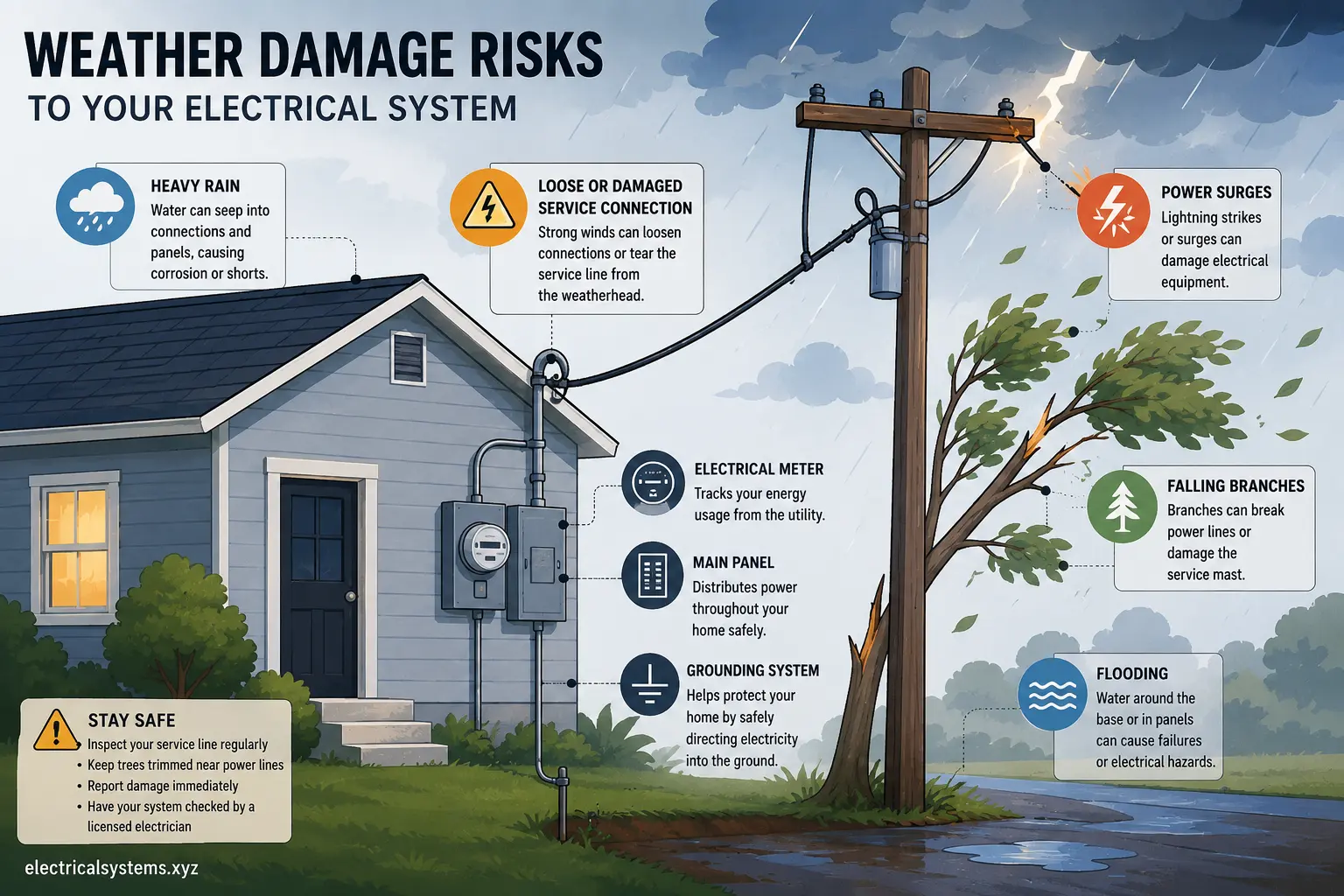
Storms frequently damage utility infrastructure. After severe weather, homeowners may notice flickering lights, intermittent power loss, unusual voltage fluctuations, or complete outages. Overhead lines are especially vulnerable to fallen branches, lightning, and high winds.
When weather-related service interruptions occur, visual clues may be present. Downed wires, damaged utility poles, sparking equipment, or transformers making unusual noises should be treated as emergencies. Never approach utility equipment that appears damaged.
Service Line and Meter Problems
The electrical service line connecting your home to the utility system can also fail. Corrosion, loose connections, aging equipment, and physical damage can interrupt electrical service. Common symptoms include lights that dim unexpectedly, appliances performing erratically, or portions of the home losing power without an obvious breaker trip.
If multiple neighbors maintain normal service while your house experiences unusual electrical behavior, contacting the utility company is often worthwhile. Utility providers can inspect service equipment and verify whether incoming power remains stable.
Restoring Power Safely After an Overload
Overloaded circuits remain one of the leading causes of breaker trips. Modern homes contain more electronic devices than ever before, and many older circuits were not designed to support today’s electrical demands. Experts warn that high-wattage appliances such as space heaters, portable air conditioners, microwaves, and similar devices can easily overload residential circuits.
Identifying the Appliance That Caused the Problem
Suppose your breaker trips immediately after operating a space heater and microwave simultaneously. That sequence provides a strong clue. Disconnect recently used appliances and reset the breaker. Then reconnect devices individually while monitoring performance.
This process resembles detective work. You’re searching for the electrical equivalent of the final straw that overloaded the circuit. Once identified, that appliance can be moved to a different circuit or operated separately from other high-demand equipment.
Preventing Future Overloads
Reducing overload risks often requires simple habit changes:
- Avoid running multiple high-wattage appliances simultaneously.
- Plug major appliances directly into wall outlets.
- Limit reliance on power strips for heavy electrical loads.
- Spread electrical demand across different circuits.
- Upgrade older circuits when necessary.
Warning signs of chronic overload include warm outlets, buzzing sounds, flickering lights, burning odors, and repeatedly tripped breakers. These symptoms should never be ignored.
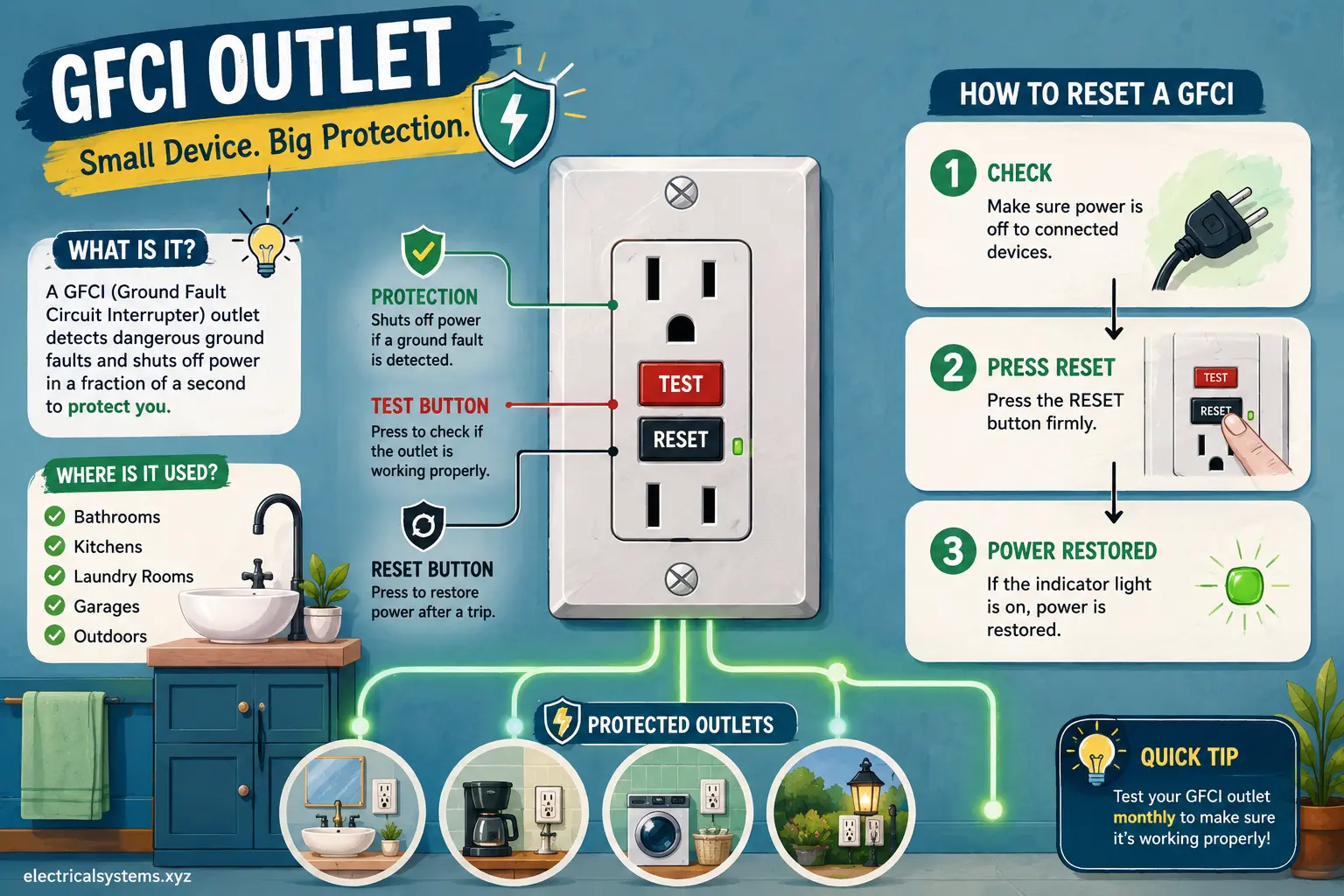
Why GFCI Outlets Sometimes Interrupt Entire Areas
One of the most confusing electrical issues homeowners encounter involves GFCI outlets. Many people assume these devices only control a single outlet. In reality, one GFCI outlet can protect several downstream outlets and fixtures on the same circuit.
Understanding GFCI Protection
A GFCI, or Ground Fault Circuit Interrupter, constantly monitors electrical current. If it detects an imbalance that could indicate electricity is flowing through water or a person, it disconnects power almost instantly. These outlets are commonly installed in bathrooms, kitchens, garages, basements, laundry rooms, and outdoor locations. Imagine a GFCI as a vigilant security guard. The moment it senses something unusual, it closes the gate. While this rapid response protects people from shock hazards, it can also leave homeowners wondering why several outlets suddenly stopped working.
How to Reset a GFCI Outlet
Look for outlets with TEST and RESET buttons. Press the RESET button firmly after unplugging connected devices. If the outlet restores power, the issue may have been a temporary ground fault. If it immediately trips again, further investigation is necessary. A hidden GFCI is often the culprit behind mysterious outlet failures. Electrical professionals note that a tripped GFCI located in a garage, bathroom, or basement may disable outlets in completely different rooms.
Situations Where Electrical Damage May Be Present
Sometimes a power interruption is more than a simple overload or nuisance trip. Certain warning signs suggest actual electrical damage may exist within the system.
Warning Signs You Should Never Ignore
Pay immediate attention to:
- Burning smells
- Scorched outlets
- Buzzing or crackling sounds
- Warm wall plates
- Melted insulation
- Flickering lights throughout multiple rooms
- Frequent breaker trips
- Visible sparks
These conditions may indicate loose wiring, electrical arcing, moisture intrusion, deteriorated components, or failing equipment. Electrical experts consistently identify these symptoms as indicators that professional evaluation is necessary. The danger with hidden electrical damage is that problems often worsen gradually. What begins as a loose connection may generate heat for months before eventually causing a major failure. Treat these warning signs seriously rather than viewing them as temporary inconveniences.
When It Is Time to Contact the Power Company or an Electrician
Knowing when to stop troubleshooting is just as important as knowing how to troubleshoot. Homeowners can safely reset breakers, inspect outlets, and identify obvious overload situations. Beyond those basic steps, professional assistance becomes the safest option.
Contact the power company if:
- Utility lines appear damaged.
- Neighbors also lost power.
- The service connection seems compromised.
- Power fluctuations affect the entire property.
Contact a licensed electrician if:
- Breakers trip repeatedly.
- The main breaker will not stay on.
- GFCI outlets refuse to reset.
- Burning odors are present.
- Electrical components feel hot.
- Lights flicker throughout the house.
- You suspect wiring damage.

Marcel Voss is a 35-year-old American blogger from Madison, Wisconsin, specializing in electrical systems, DIY projects, and technical explainers. With extensive experience writing educational web content, he focuses on transforming complex topics into practical guides for everyday readers. Through his work with electricalsystems.xyz, he emphasizes factual research, credibility, and user-friendly writing that supports long-term reader confidence.